Break Room Engagement Effectiveness: How to Know If Employees Actually Use and Value Your Program
Having a break room is not the same as having a successful break room. Learn how HR and facilities teams can measure engagement, track product performance, and ensure their refreshment program actually supports the employee experience.


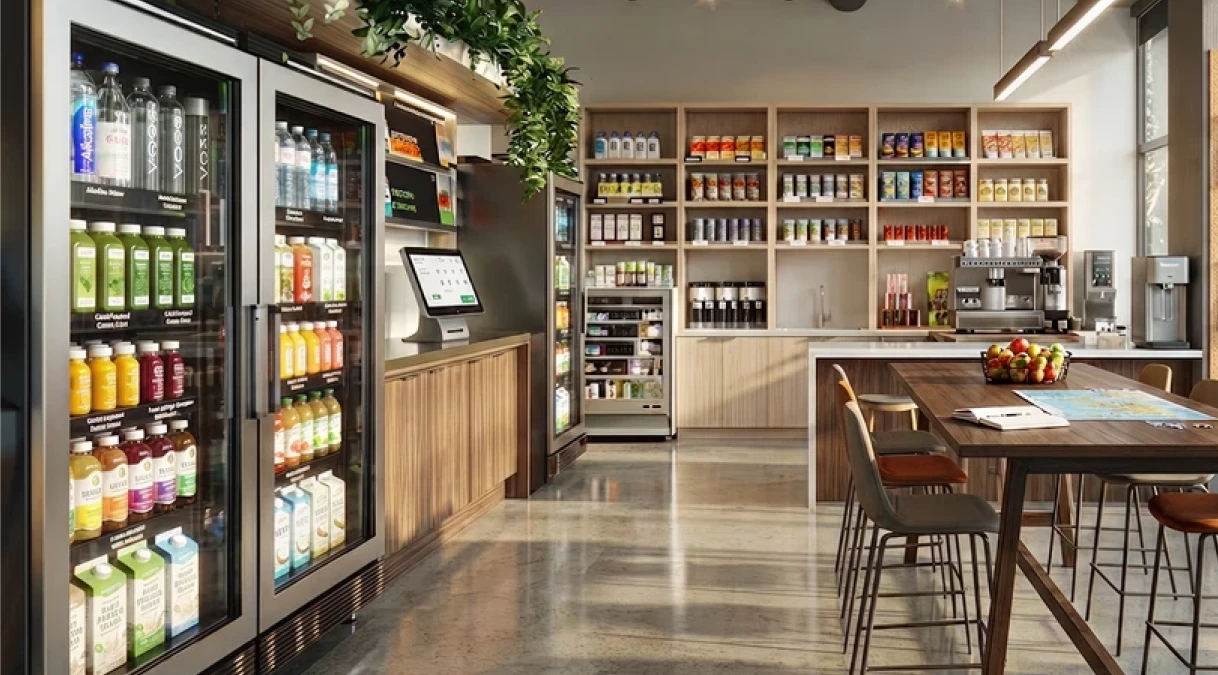
Many companies invest heavily in upgrading their office break rooms. They install sleek micro markets, bring in premium bean-to-cup coffee machines, or launch free pantry services. But a few months after the ribbon cutting, HR and facilities teams often find themselves facing a frustrating reality: they have no idea if the program is actually working.
You might see people walking away with a bag of chips or a cup of coffee, but low visibility into the actual data leaves you guessing. Are employees satisfied with the product mix? Are the snacks going stale before they sell? Are you getting complaints about broken equipment without the data to hold your vendor accountable?
If you cannot prove whether your break room is supporting workplace culture, you cannot prove its return on investment (ROI). To move beyond guesswork, you need a system to measure break room engagement effectiveness.
What Break Room Engagement Effectiveness Means
Break room engagement effectiveness is the measurement of how well your refreshment program meets the actual daily needs of your workforce. It answers a fundamental question: Is this amenity actively improving the employee experience, or is it just taking up square footage?
An effective break room operates as the cultural hub of the office. It removes daily friction by preventing employees from having to leave the building for a decent lunch or an afternoon caffeine boost. Measuring its effectiveness means tracking not just what is consumed, but how the space is utilized, how quickly issues are resolved, and how employees feel about the offerings provided.
Why Usage Alone Does Not Tell the Whole Story
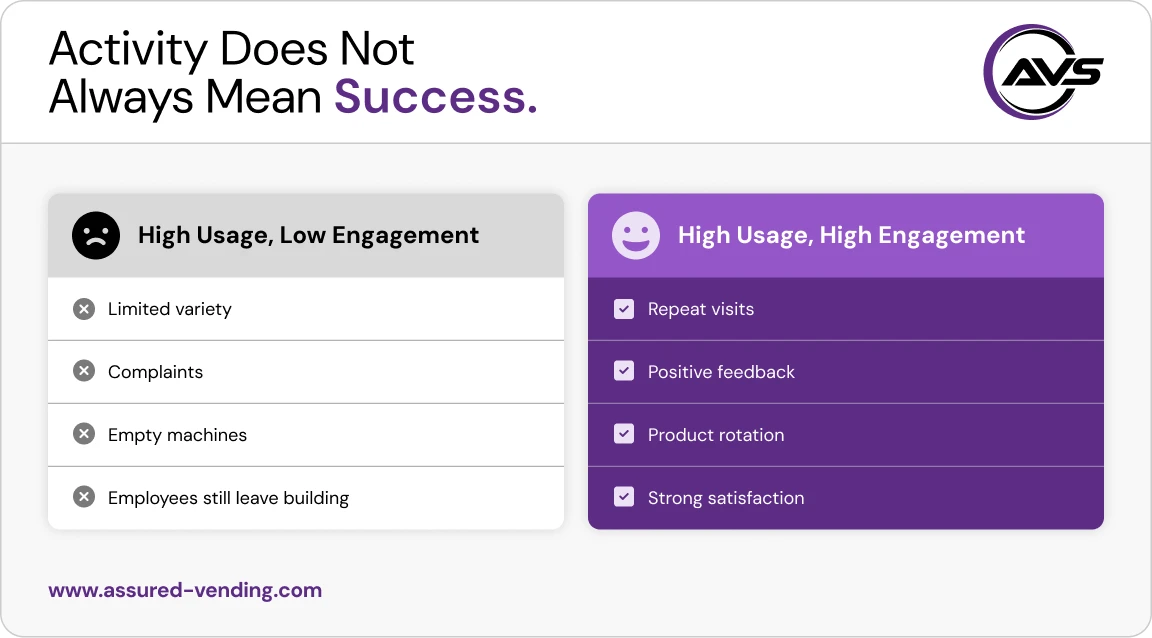
When evaluating break room success, the most common metric tracked is raw usage—how many items were purchased or consumed. While usage data is important, it does not tell the whole story.
High usage might simply mean your employees have no other options nearby and are settling for whatever is in the machine. Conversely, low usage on certain items might not mean employees don't want snacks; it might mean the current product mix is stale, out of touch with their dietary preferences, or overpriced.
If your team is only looking at top-line sales or consumption numbers, you are missing the context. You need to understand the why behind the transactions to truly measure engagement.
Five Signals That Employees Value the Break Room
If usage alone is insufficient, what should HR and facilities teams be looking for? Here are five strong signals that your break room program is highly valued:
- Reduced Offsite Trips: Are employees staying on campus for their mid-morning coffee or lunch break? A sudden drop in people driving to the local coffee shop is a massive indicator of program success.
- Increased Dwell Time: Do employees grab their item and sprint back to their desks, or do they linger, sit down, and recharge? High dwell time indicates the environment is inviting and comfortable.
- Cross-Departmental Collisions: A highly engaging break room naturally draws people from different teams to the same space. If marketing and accounting are chatting by the espresso machine, the break room is successfully fostering culture.
- Diverse Product Adoption: If engagement is high, you will see a wide variety of items moving—from fresh salads and healthy protein bars to energy drinks and traditional treats. If only bottled water and one type of chip are moving, the assortment needs an overhaul.
- Proactive, Positive Feedback: When a break room hits the mark, employees will actively tell you. You will hear requests for specific brands or seasonal flavors rather than complaints about empty shelves.
Product Requests, Restock Data, and Feedback Loops
To move from anecdotal evidence to actionable data, you need established feedback loops. The easiest way to optimize a break room is to listen to the people using it.
A modern refreshment program should include mechanisms for product requests. Whether it is a feature on the micro market kiosk, a QR code on the wall, or a dedicated Slack channel, giving employees a voice ensures your planogram (product layout) evolves with their tastes.
Restock data is your second source of truth. By analyzing what sells out quickly and what expires on the shelf, you can identify trends. Are the vegan options ignored while the high-protein keto snacks sell out in two days? This data allows you to swap underperforming products for highly requested items, keeping the break room fresh and relevant.
How Service Speed Affects Trust
You can have the best snacks and the finest coffee beans in the city, but if the card reader is broken, the shelves are bare, and the coffee machine is displaying an error code, employee trust will plummet.
Service speed is a critical component of engagement. When an employee walks into the break room looking for a specific pick-me-up and finds the machine out of order, they experience immediate frustration. Over time, recurring service failures teach employees that the break room is unreliable, prompting them to abandon the amenity altogether.
Effective engagement requires a vendor who utilizes telemetry (remote monitoring) to anticipate stock-outs and preemptively fix equipment before employees even have to submit a complaint ticket.
How to Build a Monthly Break Room Scorecard
To maintain high visibility without adding to your daily workload, HR and operations teams should utilize a Monthly Break Room Engagement Dashboard Template. This scorecard should track a few key performance indicators (KPIs):
- Availability Rate: What percentage of the time are top-selling items fully stocked?
- Product Rotation: How many new items were introduced this month to prevent menu fatigue?
- Service Response Time: What is the average time between an equipment issue being flagged and the vendor resolving it?
- Utilization Rate: What percentage of the daily onsite headcount is interacting with the break room?
- Employee Sentiment: Measured via quick quarterly pulse surveys or the volume of positive vs. negative feedback.
Looking to start tracking these metrics? Request our Break Room Engagement Dashboard Template to simplify your reporting.
What AVS Tracks to Improve the Employee Experience
At Assured Vending Services (AVS), we believe you shouldn't have to guess if your break room is working. We partner with DFW employers to provide data-driven refreshment solutions that prove their own value.
Through our advanced micro market kiosks, smart vending technology, and proactive pantry management, we track purchasing trends, inventory levels, and equipment health in real-time. We handle the planogram adjustments, rotate in trending products, and resolve maintenance issues rapidly. By managing the data and the logistics, we give HR and facilities leaders peace of mind and concrete proof that their break room is actively supporting employee engagement and retention.
Is your break room helping or hurting your workplace culture? Usage alone is not enough. Track the signals that show whether the program is actually working.
Break Room Tips & Workplace Insights, Delivered to Your Inbox.
Get the latest product trends, expert tips, and exclusive AVS offers, straight to your inbox.