How Break Rooms Create Connection Without Another Meeting
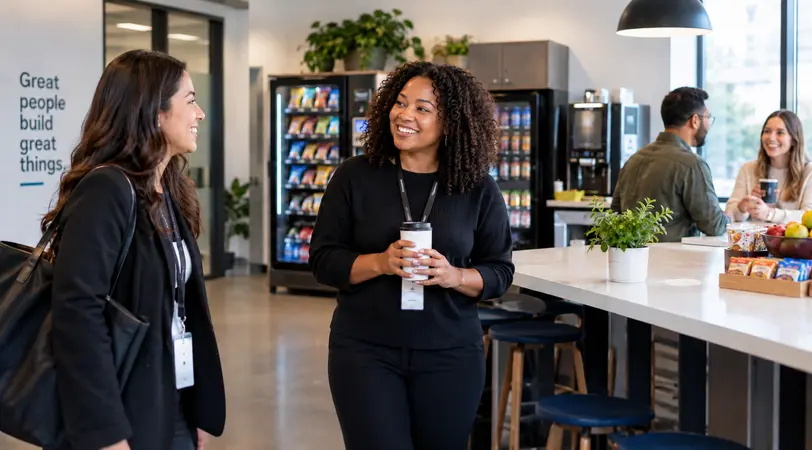
A useful, welcoming break room gives employees a natural place to pause, recharge, and connect without adding another scheduled event to the calendar.


Connection Is Increasingly Difficult to Schedule
Hybrid work, compressed calendars, distributed teams, and back-to-back meetings reduce the informal contact that once happened naturally. Organizations often respond by adding events or meetings, which can create more demands on employees without solving the underlying lack of casual interaction.
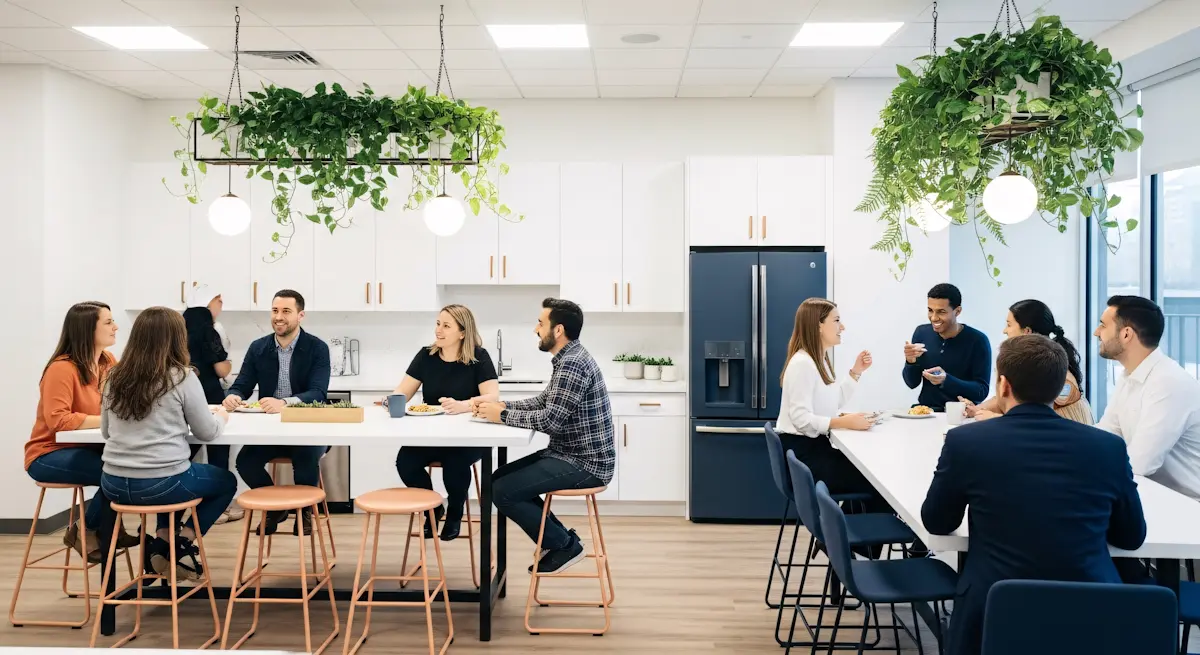
A refreshment space can create a low-pressure point of contact. People arrive for coffee, water, food, or a short break and may encounter colleagues outside their immediate team. The value comes from repeated, voluntary use rather than a programmed social event.
The Space Needs a Practical Reason to Visit
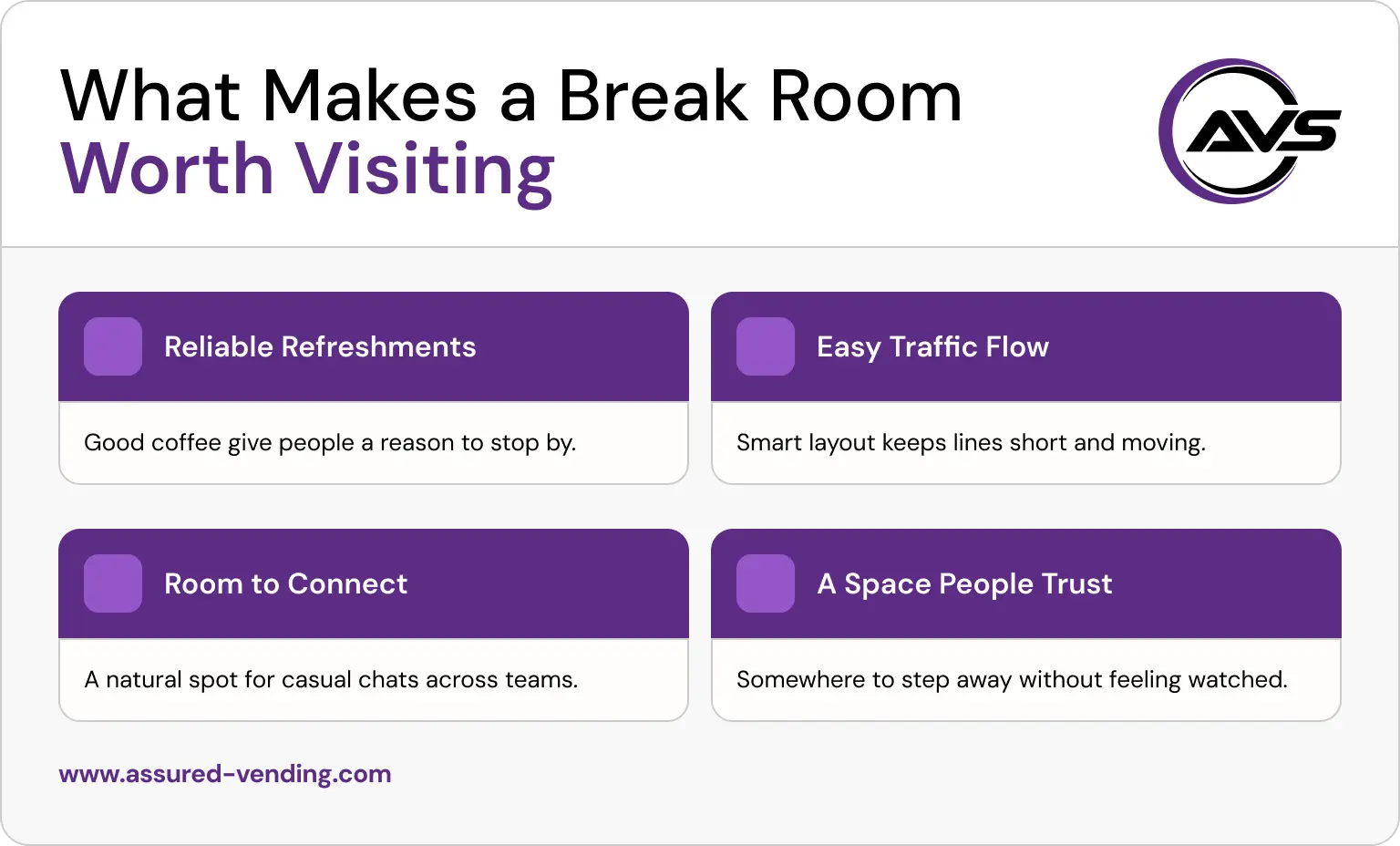
A beautifully designed lounge will remain empty if the food is limited, the coffee is unreliable, the checkout is confusing, or employees must wait in line. The social role of the space depends on the refreshment operation. Useful products and consistent service create the traffic that design alone cannot sustain.
AVS can support that use through an appropriate mix of micro market, vending, coffee, hydration, and pantry. The right configuration depends on workforce size, peak attendance, available space, and the time employees can reasonably spend away from their work area.
Layout Changes: How People Move and Interact
Equipment placement should prevent congestion while allowing employees to browse, pay, and move away from the transaction zone. Water, coffee, and food can be distributed to avoid one crowded line. Seating should support both a short solo reset and a brief conversation where space permits.
AVS can work with facilities and design teams to place equipment where it is convenient for employees and accessible for service. Good planning helps the finished space feel natural instead of crowded or confusing.
Peak and Quiet Days Require Different Expectations
CBRE found that office attendance is often at capacity on peak days but much lower on average. The same break room may feel vibrant on Tuesday and empty on Friday. Employers should not judge the space only on the busiest day or expect it to create energy when the broader attendance pattern is quiet.
A flexible product mix helps the space feel ready on busy days without creating unnecessary fresh-food waste when attendance is lower. The format, assortment, and service schedule should reflect how the office actually operates.
Shared Space Should Not Become Monitored Performance Theater
Employees need a place to step away without feeling that every conversation is being evaluated. Cameras and sensors may support micro market security and equipment operation, but organizations should communicate their purpose and follow applicable privacy and security standards.
The break room works as social infrastructure when employees trust the space. Clear policies, respectful design, and a visible service path protect that trust.
Culture Remains a Leadership Responsibility
Gallup reported that only 31 percent of U.S. employees were engaged in 2025. A stocked break room cannot resolve unclear expectations, poor management, burnout, or limited development. It can support a daily environment where people feel considered and have more opportunities to connect.
Assured Vending can position its contribution accurately. The service removes friction, improves access, and helps the employer operate a more intentional shared space. Leadership still determines whether the interactions inside that space become meaningful.
Frequently Asked Questions
Can a Break Room Improve Collaboration?
It can create more opportunities for informal interaction, but collaboration still depends on leadership, trust, role design, and team practices.
Which Refreshment Format Encourages the Most Shared Use?
The answer depends on team size and space. Micro markets and coffee stations often support longer visits, while vending and smart coolers work well for distributed or time-constrained teams.
Does a Break Room Need Seating to Support Connection?
Not always. Seating can encourage longer pauses, but good product placement, clear traffic flow, reliable service, and a welcoming environment can improve even a compact space.
Sources & Further Reading
- CBRE - 2025 Americas Office Occupier Sentiment Survey
- Gallup - U.S. Employee Engagement Declines From 2020 Peak
Ready to Create a More Useful Shared Space?
AVS can help you plan a convenient, reliable refreshment space that gives employees a natural place to pause, recharge, and connect. Create a More Useful Shared Space.
Break Room Tips & Workplace Insights, Delivered to Your Inbox.
Get the latest product trends, expert tips, and exclusive AVS offers, straight to your inbox.