Micro Markets vs. Smart Vending: How to Choose the Right Break Room Setup
Having trouble deciding between a micro market and smart vending? Learn how to evaluate your space, headcount, and employee needs to choose the best setup for your office.


When upgrading a corporate break room, facilities and operations managers often hit a roadblock: deciding which service model actually fits their space. You want to offer a modern, engaging refreshment program that makes employees feel valued, but you also have to manage real-world constraints like square footage, headcount, and budget.
Two of the most popular solutions for mid-sized to large offices are micro markets and smart vending. While both represent a massive upgrade over traditional coin-operated machines, they serve fundamentally different operational needs. Choosing the wrong model can lead to wasted space, unhappy employees, or an amenity that fails to generate enough engagement to remain viable.
This guide breaks down exactly how to evaluate your workplace and choose the right setup.
Quick Answer: Micro Market or Smart Vending?
If you want the short version:
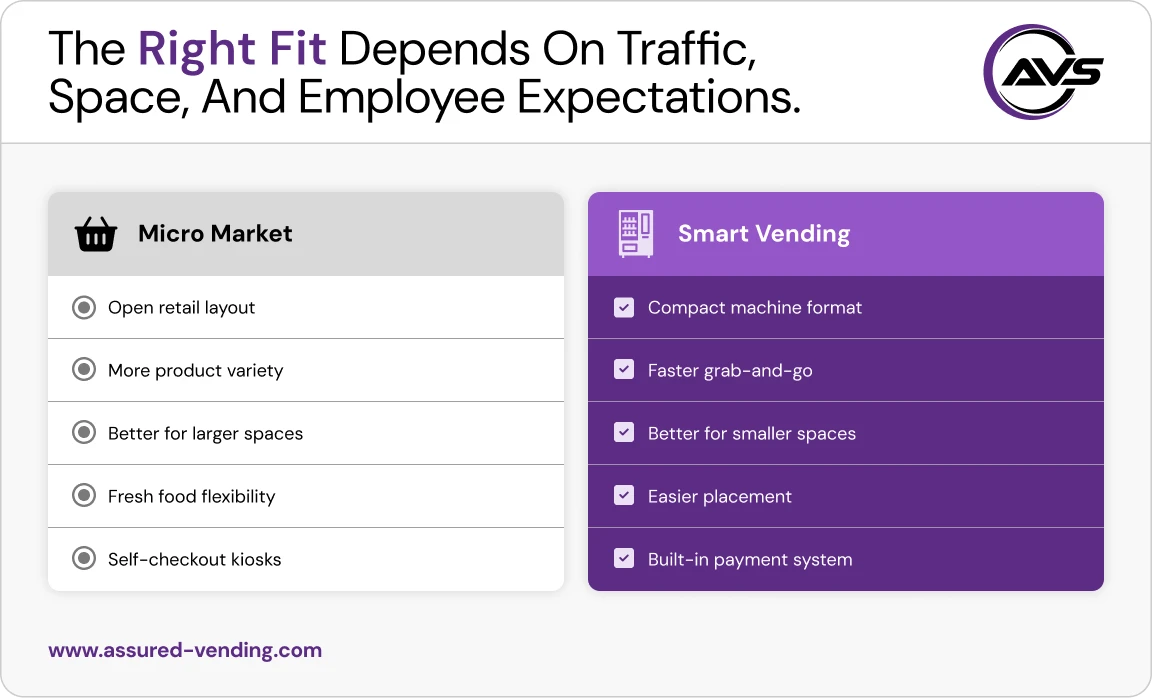
- Choose a micro market if you have more than 75 daily on-site employees, dedicated break room space, and a desire to offer fresh foods, salads, and a massive variety of snacks in an open-concept environment.
- Choose smart vending if you have limited square footage, high transient foot traffic (like a public lobby or warehouse floor), or need a highly secure, automated way to dispense snacks and beverages 24/7.
For a more precise recommendation based on your specific workplace variables, use the interactive decision tool below:
What Is a Micro Market?
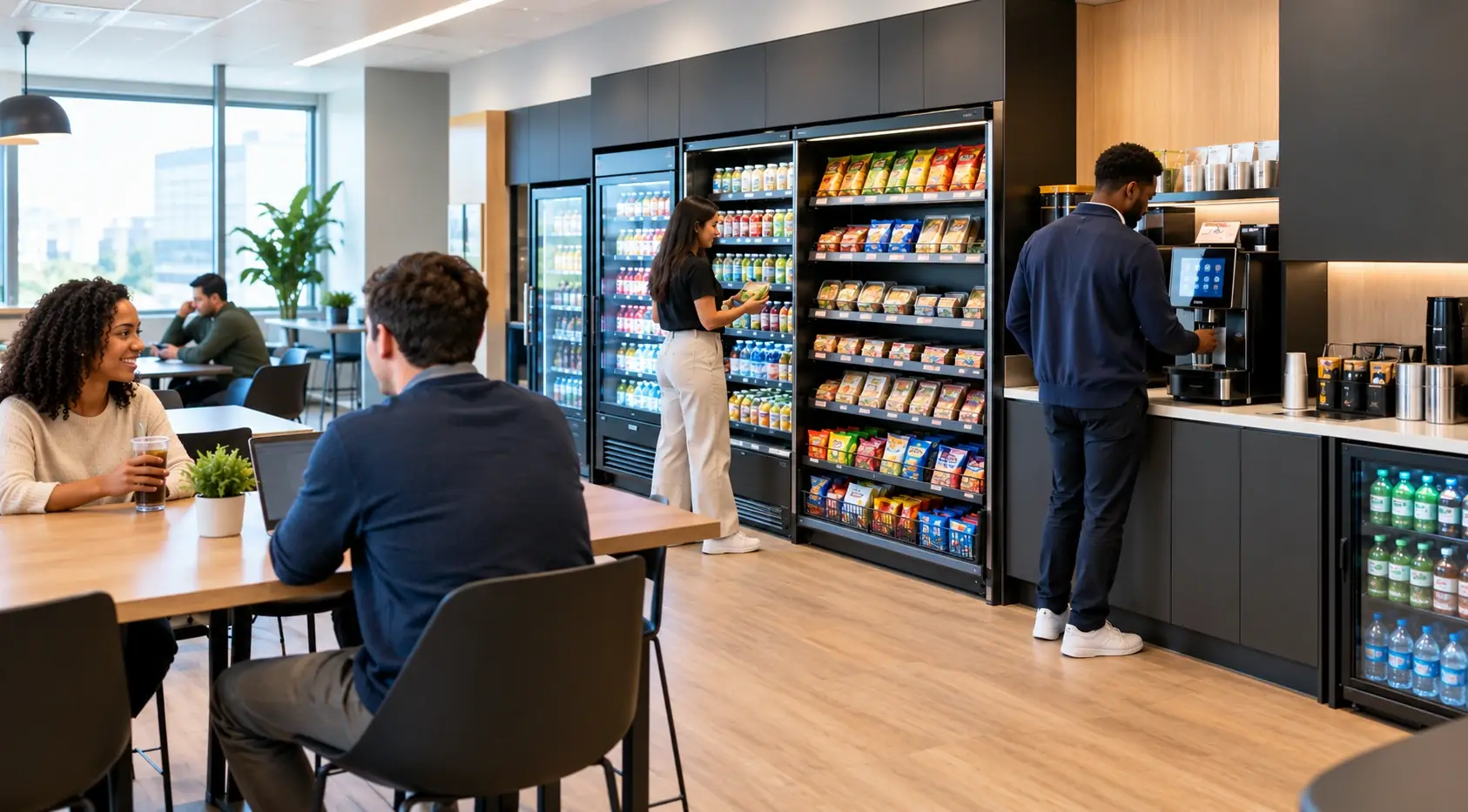
A micro market is essentially a self-sustaining convenience store built directly into your office break room. Instead of products sitting behind a pane of glass, they are displayed on open racks, in glass-front coolers, and in freezers. Employees can pick up an item, read the nutritional label, and check out using a self-serve payment kiosk.
The biggest advantage of a micro market is variety. Because it is not constrained by the mechanical coils of a traditional vending machine, a micro market can hold hundreds of different SKUs. This includes fresh salads, artisan sandwiches, fresh fruit, high-protein snacks, and specialty beverages. It transforms the break room from a quick pit stop into a true destination.
What Is Smart Vending?
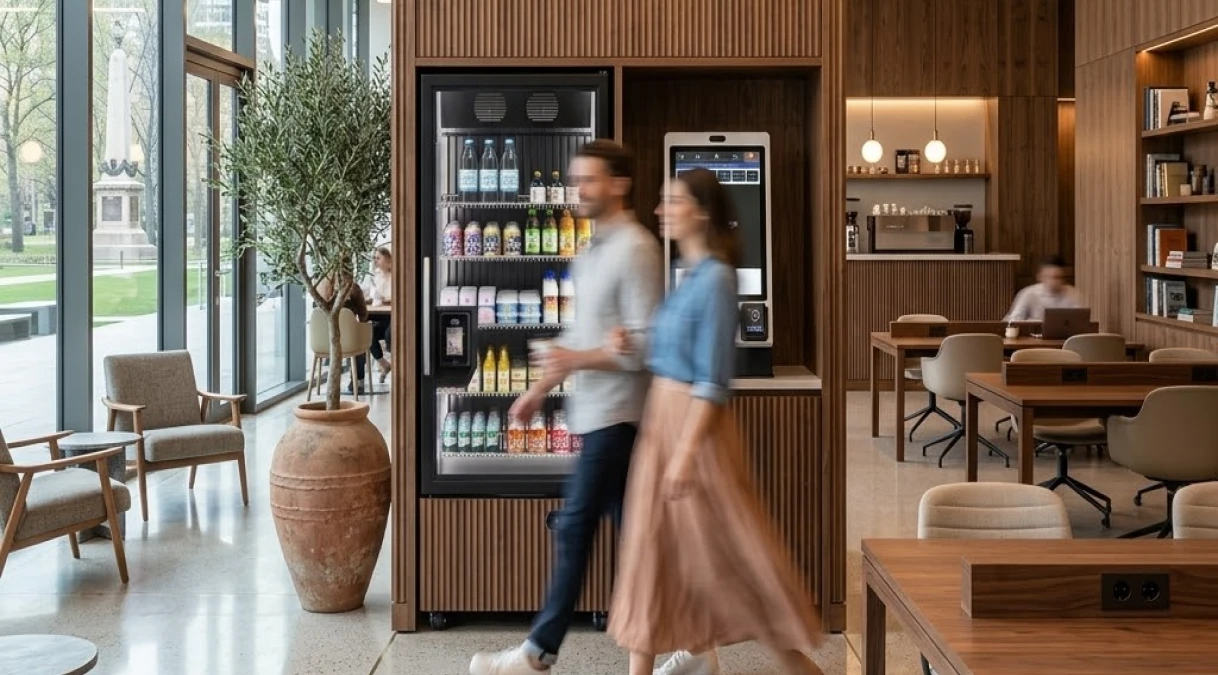
Smart vending takes the traditional vending machine and upgrades it for the digital age. These machines feature interactive touchscreens, cashless payment readers (accepting tap-to-pay, Apple Pay, and mobile wallets), and remote inventory monitoring.
While smart vending still keeps products secured behind glass, the user experience is drastically improved. Modern machines guarantee product delivery (or automatically refund the user), allow for multi-item purchases in a single transaction, and rarely suffer from the mechanical jams that plagued older models. Smart vending is the ultimate solution for security and footprint efficiency.
How to Compare Space, Headcount, Traffic, and Schedule
To make the right choice, you must evaluate four distinct variables in your facility:
- Space: A micro market requires dedicated wall space (usually 10 to 15 linear feet) for racks, coolers, and a kiosk. Smart vending machines are modular and can be slid into tight alcoves or hallways.
- Headcount: Micro markets rely on volume to keep fresh food rotating. They generally require 75 or more daily on-site employees to prevent spoilage and maintain a vibrant product mix. Smart vending can operate profitably with smaller headcounts.
- Traffic Type: Is your building closed to the public, or do you have high visitor and contractor traffic? Micro markets operate on an honor system and are best suited for closed, secure corporate environments. For public-facing areas (like hospital waiting rooms or manufacturing floors with transient labor), the physical security of smart vending is essential.
- Schedule: Both options operate 24/7 without a cashier, making them perfect for shift workers and flexible hybrid schedules.
When a Blended Program Makes Sense
You do not always have to choose just one. For large corporate campuses or sprawling manufacturing facilities, a blended program is often the most effective strategy.
In a blended setup, you might install a flagship micro market in the primary employee cafeteria or main break room, serving as the central hub for fresh food and lunch options. Then, you place smart vending machines in secondary break areas, remote hallways, or near loading docks to ensure that employees on the far side of the building still have immediate access to hydration and snacks without walking ten minutes across campus.
How Payment, Inventory, and Service Technology Change the Experience
The defining feature of both modern micro markets and smart vending is technology. Whether an employee is scanning a salad at a kiosk or tapping their phone on a vending machine reader, the transaction is frictionless.
More importantly, this technology empowers your service provider. Modern setups utilize remote telemetry. This means the vendor knows exactly which products are selling, when a machine goes offline, and what needs to be restocked before a route driver even leaves the warehouse. This technology ends the era of empty shelves and broken card readers, ensuring your break room always feels intentional and cared for.
How AVS Designs the Right Fit for Each Workplace
At Assured Vending Services (AVS), we know there is no one-size-fits-all approach to workplace amenities. If you manage a facility in the Dallas-Fort Worth area, our team helps you navigate this exact decision.
We assess your floor plan, analyze your daily headcount, and listen to your cultural goals. Whether your team needs the expansive variety of a custom-built micro market, the sleek efficiency of smart vending, or a carefully designed hybrid approach, AVS handles the installation, technology, and ongoing inventory management. We take the guesswork out of break room design so you can focus on running your facility.
Frequently Asked Questions
Q: Do micro markets suffer from high theft?
A: Theft (shrinkage) in closed corporate environments is historically very low, usually around 1-2%. Micro markets utilize security cameras and strategic kiosk placement to deter theft effectively.
Q: Can smart vending machines sell fresh food?
A: Yes. Specialized smart food machines are refrigerated and have health-timers built in. If the temperature drops below a safe threshold, the machine will lock to prevent the sale of spoiled food.
Q: Do I have to pay to install a micro market or smart vending machine?
A: In most traditional service models, the vendor provides the equipment, installation, and inventory management at no direct cost to the employer; the vendor generates revenue from the product sales.
Q: Can I subsidize the cost of items for my employees?
A: Yes! Both micro market kiosks and smart vending machines allow employers to seamlessly subsidize purchases, either by discounting specific items or providing employees with a monthly digital stipend.
What This Unlocks Next
The next step in upgrading your workplace is understanding how these automated systems fit into the broader spectrum of daily office perks.
Read the next article in the AVS series: Coffee, Hydration, and Pantry: The Everyday Perks That Shape Workplace Culture
Break Room Tips & Workplace Insights, Delivered to Your Inbox.
Get the latest product trends, expert tips, and exclusive AVS offers, straight to your inbox.