What Makes a Workplace Vending Program Successful?
Workplace vending success depends on more than machines. Learn the factors that influence employee usage and program performance.


.webp)
Vending Success Is About More Than Equipment
Many organizations assume vending performance depends primarily on machine type.
In reality, successful vending programs depend on a combination of service consistency, product mix, and operational alignment with workplace routines.
When these factors work together, vending becomes a reliable workplace convenience rather than an occasional backup option.
Consistent Product Availability
The most important factor in vending performance is reliability.
Employees quickly lose trust in machines that frequently:
- run out of popular items
- experience downtime
- require maintenance
- have limited restocking frequency
Consistent availability encourages employees to depend on workplace vending rather than leaving the building.
Balanced Product Mix
Workplaces include a wide variety of preferences.
Successful vending programs offer a balanced selection that may include:
- snacks
- beverages
- healthier options
- quick meal items
When product variety aligns with workforce preferences, usage increases naturally.
Strategic Machine Placement
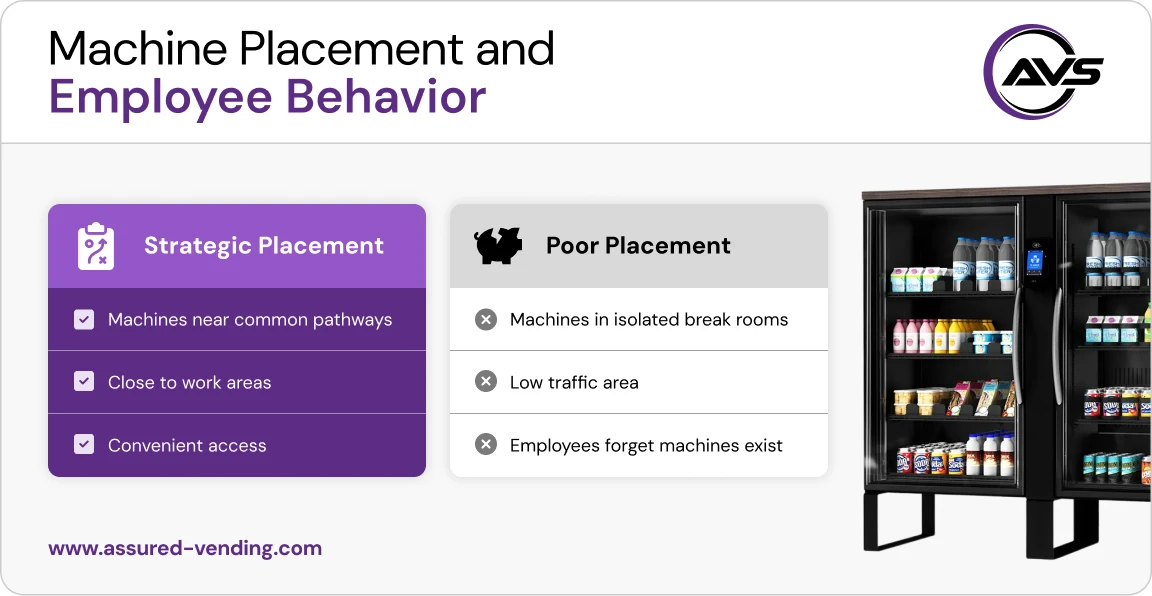
Location within the workplace plays a major role in vending performance.
Machines placed along natural traffic patterns tend to receive higher engagement than those placed in isolated areas.
Accessibility encourages short breaks and reduces disruption to workflow.
Reliable Service Schedule
A structured service schedule prevents problems before they occur.
Rather than responding to complaints, successful programs rely on proactive restocking and monitoring.
Predictable service helps maintain employee confidence in the program.
Adapting to Workplace Changes
Workplace needs evolve over time.
Factors such as employee growth, shift changes, or facility expansion may require adjustments to vending programs.
Programs that adapt regularly tend to maintain stronger engagement.
Modern Workplace Expectations
Today’s employees often expect workplace refreshment options to match the convenience of nearby retail stores.
Successful vending programs provide:
- dependable availability
- modern equipment
- flexible product selection
- consistent service quality
Meeting these expectations helps maintain employee satisfaction.
Successful workplace vending programs rely on more than installing machines. Reliability, product alignment, and consistent service all contribute to long-term engagement.
When these factors work together, vending becomes a dependable part of the workplace environment.
Reach out today and let’s figure out the best path forward together.
Break Room Tips & Workplace Insights, Delivered to Your Inbox.
Get the latest product trends, expert tips, and exclusive AVS offers, straight to your inbox.