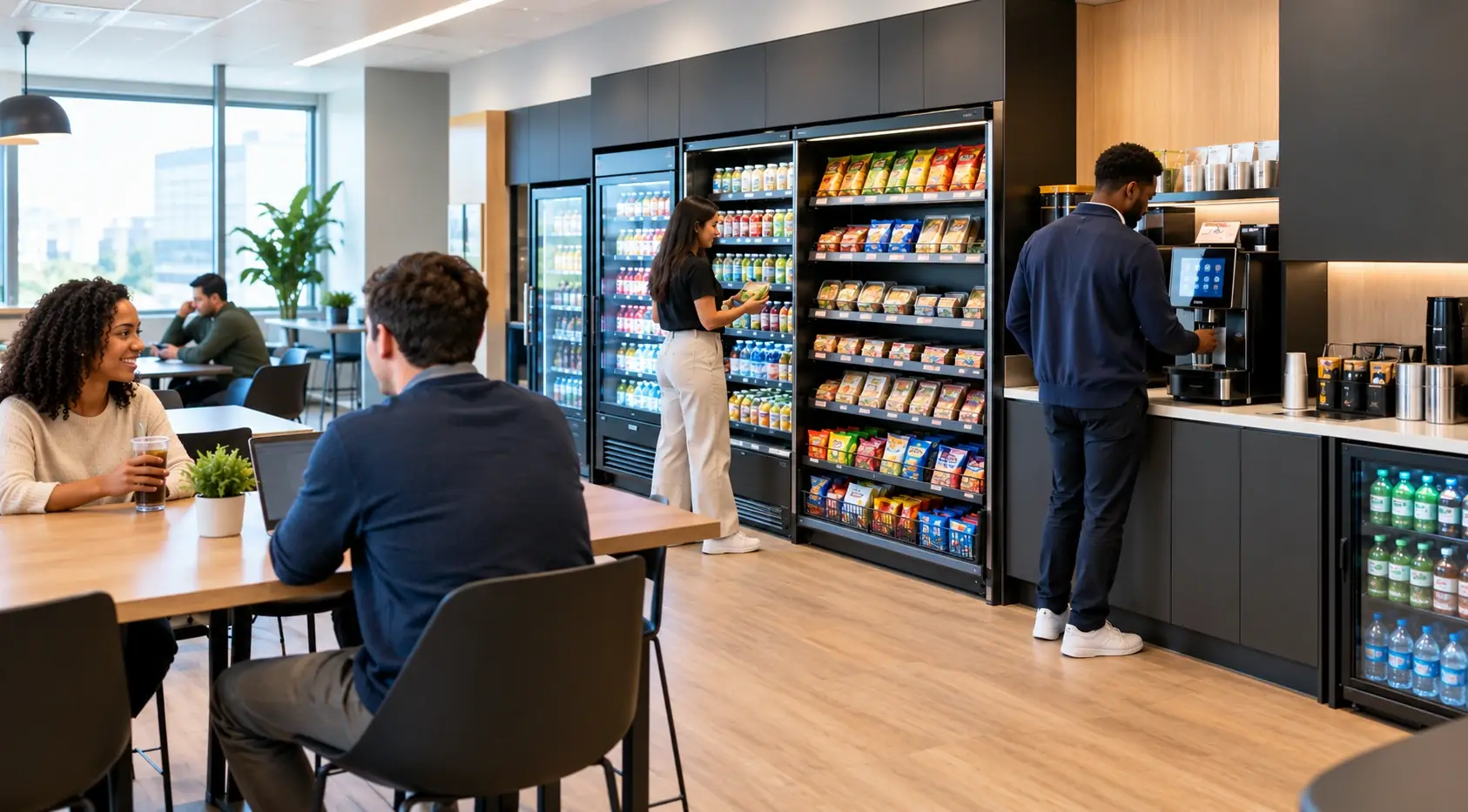
What Businesses Should Expect During a Vending Service Installation
Installing a vending or micro-market service is simpler than most businesses think. Here’s the full process from assessment to ongoing service.


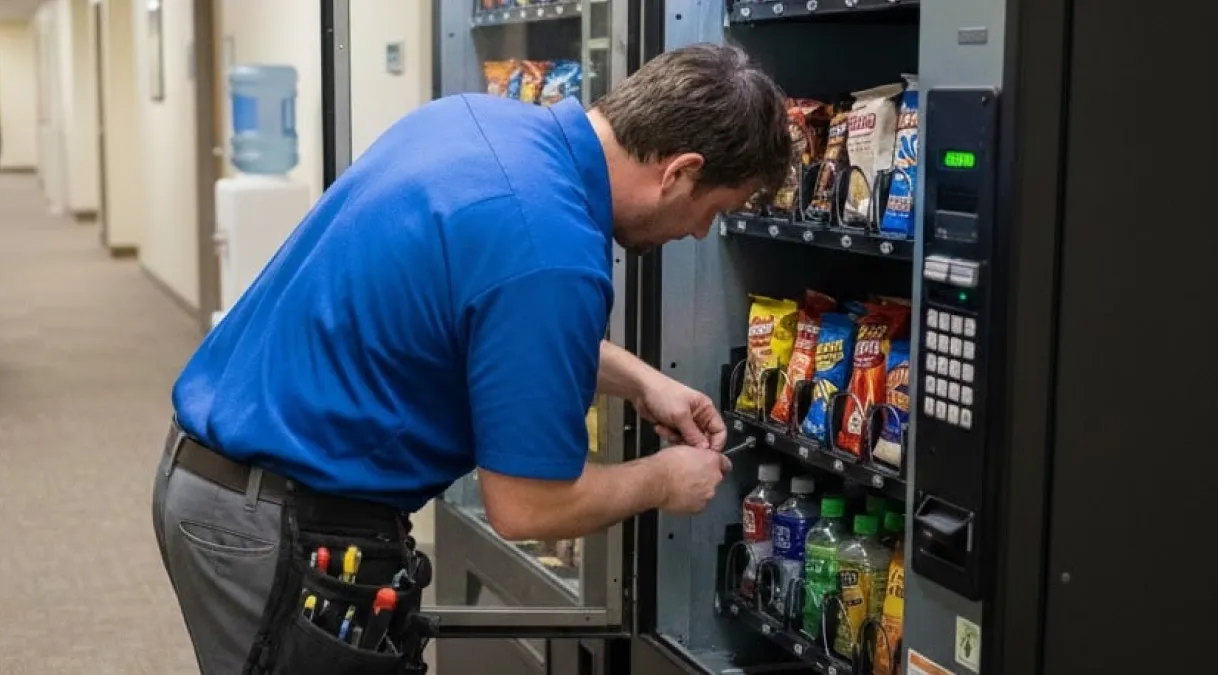
Installation Is Not Just Dropping Off Machines
Many organizations hesitate to upgrade their breakroom because they assume installation will disrupt daily operations.
In reality, modern vending providers handle the process as a structured rollout, designed to minimize involvement from staff and avoid downtime.
Understanding the steps helps businesses plan confidently and know what to expect.
Step 1: Workplace Assessment
The process begins with evaluating how the space is actually used.
This includes reviewing:
- employee count
- shift schedules
- traffic patterns
- available space
- power and access points
Rather than placing equipment arbitrarily, the layout is planned to support daily workflow and accessibility.
For larger refreshment upgrades such as micro-markets, providers may also design the layout to improve convenience and usage patterns.
Step 2: Equipment Selection
The recommended equipment depends on workplace activity rather than company size alone.
Common options include:
- snack and beverage vending
- fresh food refrigeration
- coffee equipment
- micro-market stations
Modern setups prioritize reliability and consistency so employees can depend on availability throughout the day.
Step 3: Installation Day
A professional installation is scheduled to avoid disruption.
Typical installation includes:
- equipment placement
- connectivity setup
- payment system configuration
- testing
The goal is for the workplace to operate normally during the process.
Businesses typically do not need to prepare inventory, staff support, or operational changes.
Step 4: Product Planning & Launch
After installation, products are stocked based on workplace needs.
Modern providers use usage trends rather than assumptions to determine selection.
Micro-markets often include expanded options and 24/7 access that help employees stay onsite and energized.
Step 5: Ongoing Service & Monitoring
Installation is only the beginning, service quality depends on ongoing management.
Professional vending programs operate through:
- proactive restocking
- remote monitoring
- maintenance response
- product adjustments
Service reliability is measurable.
For example, service programs may close most issues quickly and often detect problems before customers notice.
This prevents outages and reduces the need for workplace staff involvement.
What Businesses Do NOT Have To Do
A managed service removes operational responsibility.
Businesses do not handle:
- purchasing inventory
- repairs
- troubleshooting
- payment systems
- supplier coordination
The provider manages the entire lifecycle after installation.
Why Proper Installation Matters
When implemented correctly, refreshment programs become part of daily workflow rather than an interruption.
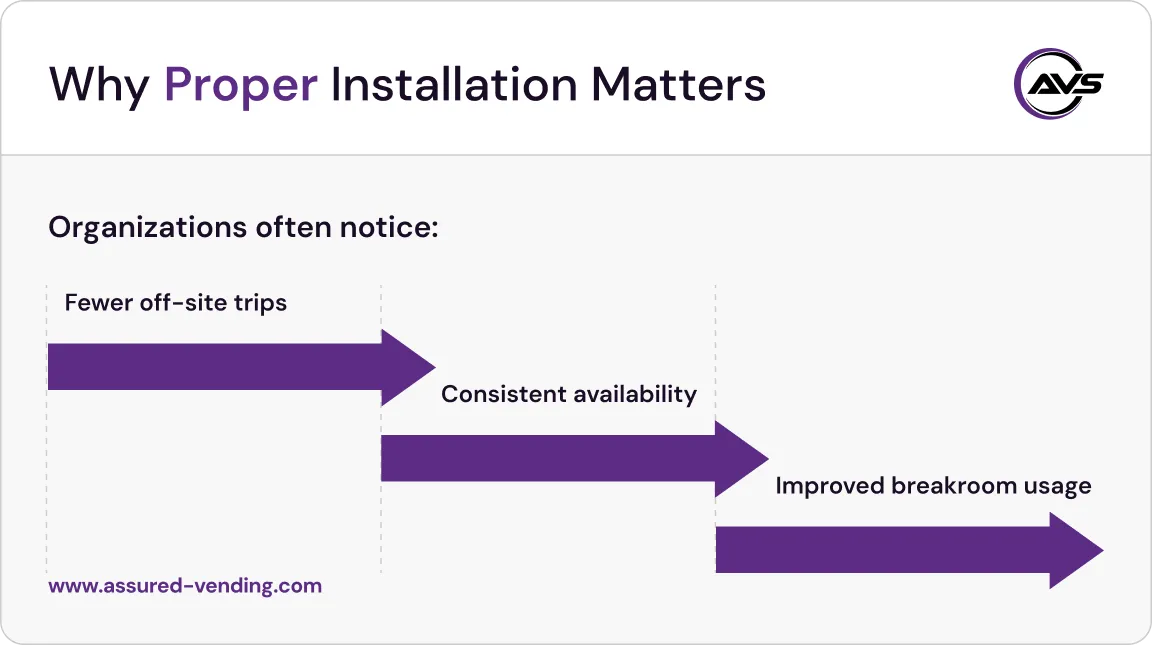
A well-planned installation determines whether a program succeeds long term.
A professional vending installation is a structured service rollout, not a delivery. From assessment to monitoring, the provider manages the process so businesses gain convenience without operational burden.
Understanding the process helps organizations upgrade confidently while keeping operations uninterrupted.
Break Room Tips & Workplace Insights, Delivered to Your Inbox.
Get the latest product trends, expert tips, and exclusive AVS offers, straight to your inbox.