Workplace Wellness That Works: Balancing Health, Taste, Price, and Convenience
A practical workplace wellness program makes healthier options appealing, affordable, and easy to buy while preserving the familiar choices employees enjoy.



Healthy Intentions Compete with Everyday Food Decisions
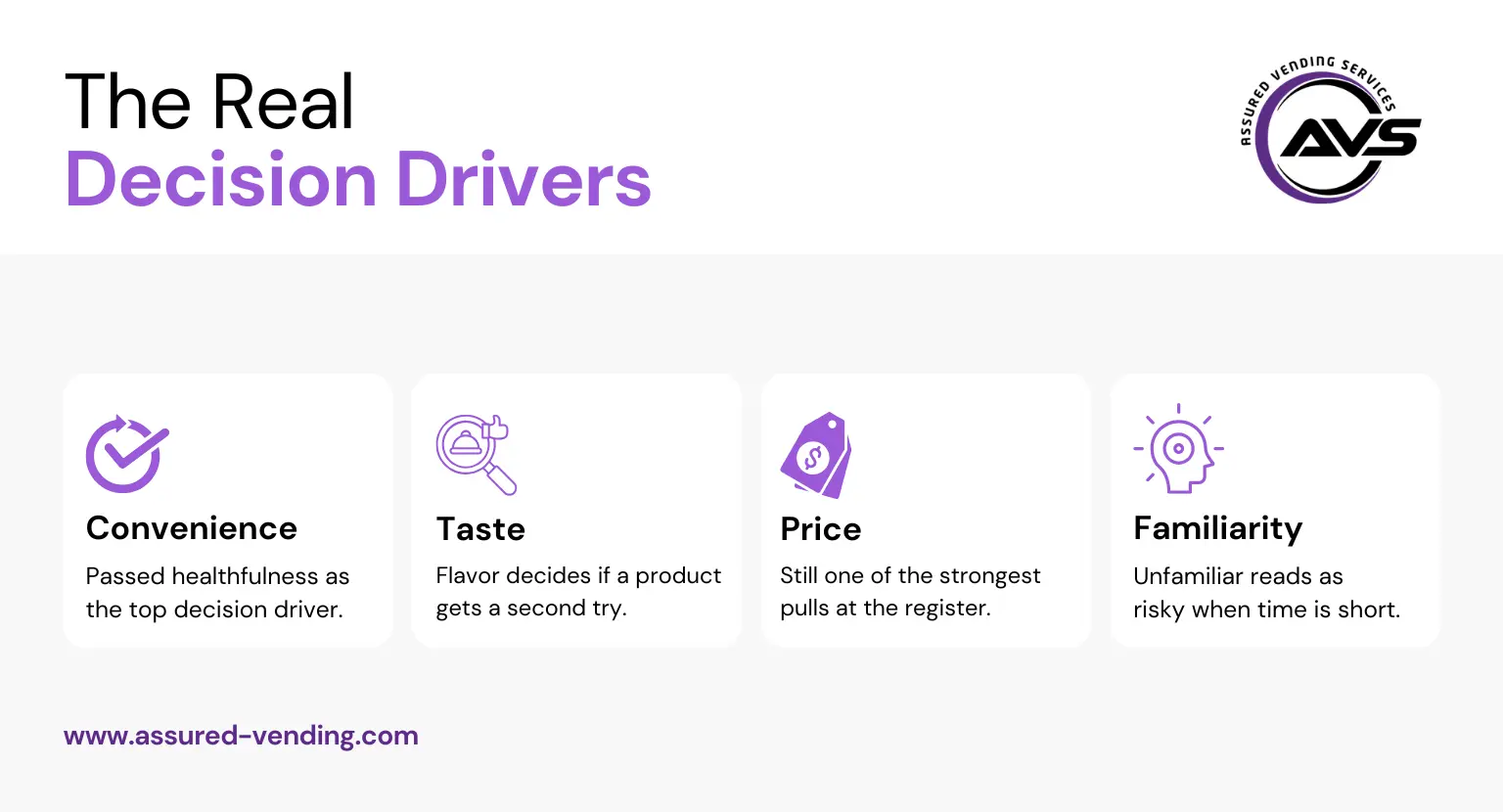
Employers often begin with a well-meaning request for healthier snacks, then discover that the new products do not sell. The issue is usually not that employees reject wellness. It is that food decisions also reflect taste, price, convenience, familiarity, portion size, and time pressure. A program that ignores those factors can create an impressive shelf that generates waste.
IFIC reported in 2026 that convenience had moved ahead of healthfulness as a food and beverage decision driver for the first time in the survey history. Taste and price remained even more influential. The implication for employers is direct: wellness needs to work inside the reality of the workday, not against it.
Availability Is Necessary but Not Sufficient
The CDC recommends making healthier food available and affordable in settings such as worksites and vending environments. Availability matters because employees cannot choose what is not offered. Yet a healthy item that is hidden, overpriced, stale, or unfamiliar is not meaningfully accessible.
AVS can build a balanced assortment with protein, nuts, lower-sugar beverages, fresh items, portion-controlled choices, and dietary specific products while retaining familiar favorites. The best mix is not an ideological inventory. It is a commercially sustainable program that improves access and earns repeat use.
Placement, Pricing, and Promotion Shape Choice
Behavioral design is one of the most practical levers available to an employer. The CDC identifies placement, layout, pricing, promotion, product defaults, information, and organizational policy as tools that can encourage healthier selections. These tools do not remove choice. They change which options are easiest to notice and consider.
In a micro market, better-for-you products can be placed at eye level or near the checkout. In vending, facings and row position can improve visibility. Employer subsidy can narrow the price gap between a healthier meal and a less expensive snack. Signage can highlight protein, lower-sugar, or portion information without making medical claims.
Nutrition Information Should Be Easy to Review
IFIC research in 2026 found that consumers regularly check nutrition information, especially calories, sugars, protein, and sodium. A workplace program should make package labels visible and avoid covering information with merchandising stickers. Digital market interfaces can also support product details where the platform allows.
Assured Vending can help employers select products with clear labeling and credible claims. The operator should not diagnose employee needs or promise health outcomes. Its role is to curate options, preserve information, and use sales data to understand which products combine nutritional relevance with taste and value.
Cultural and Dietary Preferences Require Real Assortment Depth
Workforces are diverse. Employees may seek halal, kosher, gluten-free, dairy-free, vegetarian, low sugar, or allergen-aware options. No operator can eliminate every risk through assortment alone, and package labels remain the controlling source. Still, a program can create more inclusive access by identifying needs and maintaining a deliberate mix.
The CDC encourages working with food vendors to ensure foods are culturally preferable as well as available and affordable. AVS can use employee surveys, employer guidance, product sourcing relationships, and local Texas brands to create a program that feels relevant rather than generic.
A Balanced Program Should Evolve with Employee Preferences
A strong workplace refreshment program should not stay frozen in time. As employees try new products and share feedback, the assortment can evolve while protecting the dependable choices people buy regularly.
AVS uses purchasing patterns and product requests to rotate underperforming items and make room for options employees are more likely to choose again. This keeps the selection fresh without turning the break room into an experiment.
Frequently Asked Questions
Should an Employer Remove All Traditional Snacks?
No. A balanced program protects choice and improves the visibility, affordability, and appeal of healthier options.
What Makes a Healthier Product Accessible?
It needs to be available, appealing, affordable, clearly labeled, easy to find, and convenient to purchase.
Can AVS Meet Specific Dietary Needs?
AVS can source and merchandise a broader range of options, but employees must review package labels and employers should avoid presenting the assortment as medical guidance.
Sources & Further Reading
- IFIC — 2026 Food & Health Survey
- IFIC — Americans’ Perceptions of Nutrition Labels
- CDC — Healthy Food Environments
- CDC — Apply Behavioral Design Strategies
- CDC — Work With Food Vendors
Ready to Build a Wellness Program Employees Will Actually Use?
AVS can help you create a balanced assortment that makes better-for-you choices easier to find while keeping the familiar products employees already enjoy. Request a Better-for-You Product Review.
Break Room Tips & Workplace Insights, Delivered to Your Inbox.
Get the latest product trends, expert tips, and exclusive AVS offers, straight to your inbox.