Choosing a Local Vending Provider
Selecting a vending provider involves more than equipment. Here’s what organizations evaluate when choosing a local partner.



The Decision Isn’t About the Machine
When organizations consider adding vending, they often start by thinking about products or equipment.
However, the long-term success of a program depends far more on the provider than the machine itself.
Because vending is a recurring service, businesses evaluate reliability and responsiveness rather than just features.
Why Local Matters
Workplace refreshment programs operate daily. Small delays quickly become noticeable to employees.
A local provider influences:
- response time
- restocking consistency
- familiarity with the area
- communication accessibility
Service proximity often determines satisfaction more than equipment model.
What Businesses Actually Evaluate
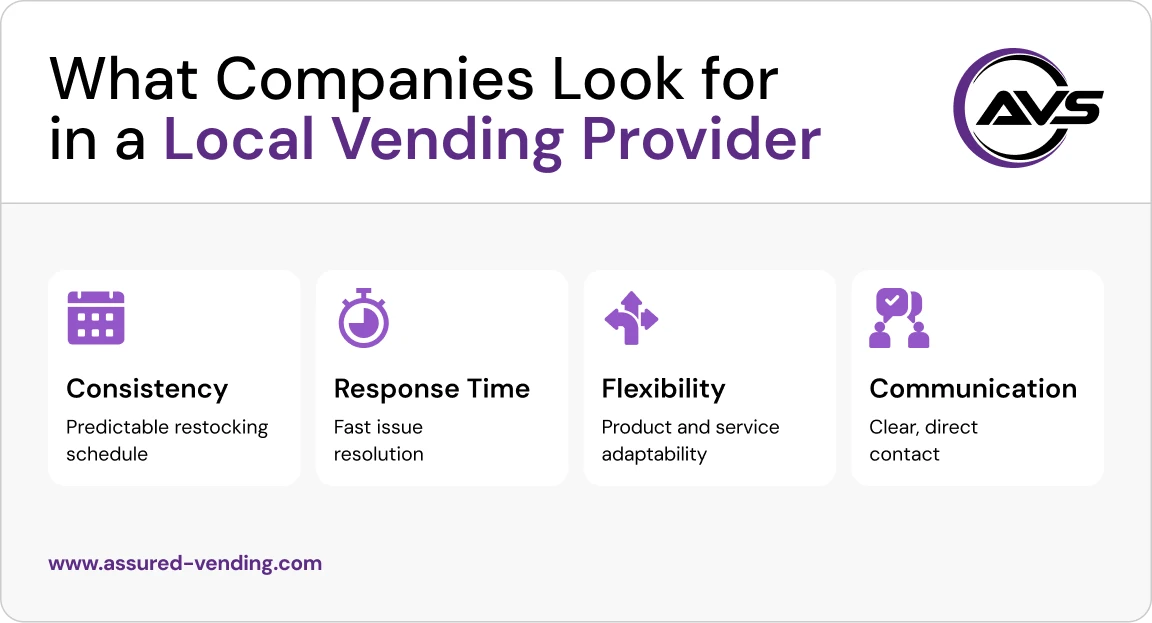
Consistency of Service
Employees expect availability without needing to report problems. Reliable restocking schedules prevent disruptions to routines.
Response Time
Issues occasionally occur. The speed at which they are resolved shapes perception of the entire program.
Flexibility
Organizations change over time. Providers that adapt product selection and service frequency support long-term use.
Communication
Having a clear contact and predictable service structure reduces administrative effort for staff.
Why Equipment Alone Doesn’t Predict Success
Two locations can have identical machines but very different experiences.
The difference typically comes from:
- monitoring frequency
- service planning
- local operational awareness
Programs fail when management depends on complaints rather than proactive service.
Local Service and Workplace Experience
Employees interact with vending daily. Small inconveniences accumulate quickly and affect satisfaction with workplace amenities.
Consistent service builds trust, employees rely on the availability and incorporate it into routines.
Signs a Provider Fits the Environment
Organizations often look for:
- predictable visit schedules
- familiarity with local operations
- ability to adjust selections
- clear support channels
These factors support long-term usage more than product variety alone.
Choosing a vending provider is less about installing equipment and more about establishing a dependable service relationship. Local responsiveness and consistency determine whether a program becomes a valued convenience or an ongoing frustration.
Understanding this helps businesses evaluate providers based on operational fit rather than surface features.
Break Room Tips & Workplace Insights, Delivered to Your Inbox.
Get the latest product trends, expert tips, and exclusive AVS offers, straight to your inbox.