Healthy, Local, and Dietary-Friendly Snacks
Stale product selections and ignored dietary restrictions ruin break room adoption. Learn how to build a dynamic, data-driven product mix featuring healthy, local, and dietary-friendly snacks that employees actually trust.


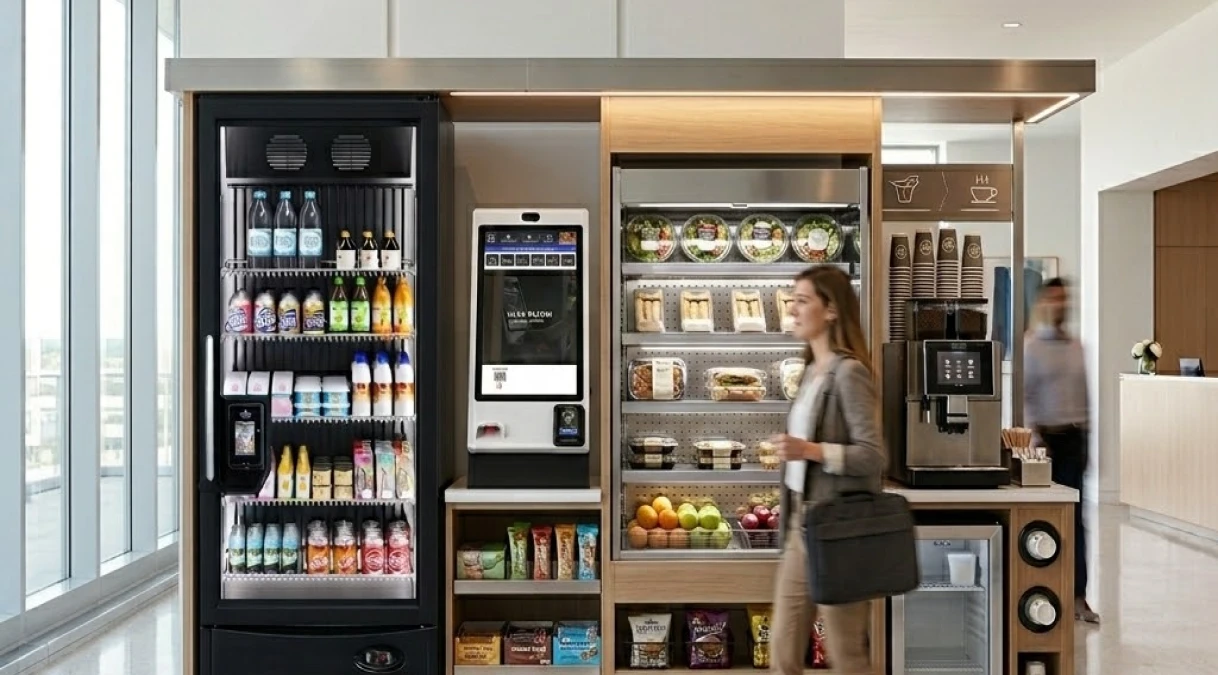
For many HR leaders, facilities directors, and office managers, stocking the corporate break room is a constant exercise in frustration. It usually starts with the best of intentions: a massive bulk order of highly varied snacks designed to please everyone. But within two weeks, the popular items are completely gone, the obscure flavors sit untouched on the shelf for months, and an employee inevitably asks why there are no gluten-free or low-sugar options available.
When the product mix is static, uninspired, or tone-deaf to the actual needs of the workforce, the break room quickly loses its value as a daily perk. Employees stop visiting the space, morale dips, and the company wastes money on inventory that eventually expires and is thrown away.
If you want your team to see the office as a welcoming, supportive environment, you have to offer more than generic potato chips and sugar-heavy sodas. Modern employees expect better. They want the healthy office snacks DFW locals love, functional beverages that provide sustained energy, and refreshment options that respect their personal dietary needs. Achieving this requires a strategic, data-driven product mix—one that builds trust and engagement without forcing facilities managers to spend hours every week manually sourcing products.
Why Product Fit Drives Break Room Trust
Trust in the workplace is built through consistent, thoughtful actions. While we often think of trust in terms of leadership transparency, project autonomy, or fair compensation, it also extends directly to the physical environment. When an employee walks into the break room and sees that the company has provided high-quality snacks that fit their lifestyle and dietary needs, they feel seen and valued.
Conversely, when the product selection is stale, repetitive, or solely focused on the cheapest available junk food, it creates unnecessary friction. Employees begin to view the break room not as a benefit, but as a corporate afterthought. They leave the building to find what they actually want, taking their collaboration and productivity with them.
Product fit means aligning the inventory of your micro market, pantry, or vending machines with the actual demographics and preferences of your building. A warehouse logistics team working 12-hour shifts may prioritize high-calorie, high-protein meal replacements and energy drinks to sustain physical stamina. A downtown corporate headquarters may heavily favor sparkling water, organic fruit snacks, plant-based protein bars, and locally roasted coffee. When the product mix accurately reflects the people using it, break room adoption skyrockets, off-site coffee runs decrease, and the amenity actually yields a positive return on investment.
The Shift Toward Better-for-You Choices
The era of the "junk food only" break room is definitively over. Across the country, corporate wellness initiatives are moving from abstract concepts—like annual health fairs or discounted gym memberships—into daily operational realities. Employers are finally realizing that what their teams eat directly impacts their cognitive function, mood, and afternoon productivity.
When employees consume highly processed, high-sugar snacks at 2:00 PM, the biological result is predictable. They experience a brief energy spike followed by a severe glycemic crash. This leads to a loss of focus, increased irritability, and diminished output during the critical final hours of the workday.
The shift toward "better-for-you" choices focuses on providing sustained, even energy. This includes:
- High-Protein Snacks: Beef and turkey jerky, dry-roasted nuts, low-sugar protein bars, and Greek yogurt keep employees satiated longer.
- Complex Carbohydrates: Baked chips, whole-grain crackers, and oatmeal alternatives that provide slower-burning energy without the sugar crash.
- Low-Sugar Hydration: Enhanced functional waters, unsweetened iced teas, and kombucha instead of traditional high-fructose corn syrup sodas.
Offering better-for-you choices does not mean eliminating indulgent snacks entirely. Sometimes an employee just wants a traditional chocolate bar after a stressful meeting. However, it means rebalancing the ratio of your break room so that healthy choices are abundant, accessible, appealing, and positioned prominently.
Dietary-Friendly Options: Low-Sugar, Gluten-Free, Keto, Vegan, and More
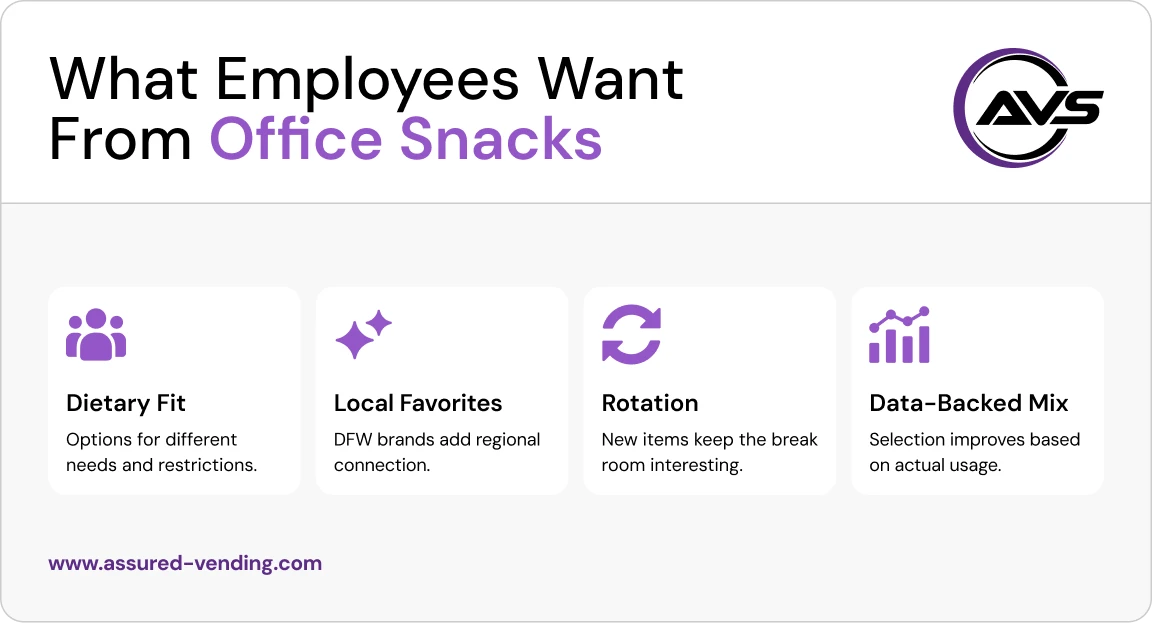
In today’s diverse workforce, dietary restrictions are no longer niche preferences; they are standard operating realities. An employee with Celiac disease, severe nut allergies, or lactose intolerance cannot simply "make do" with a standard vending machine. If the break room does not accommodate their medical or lifestyle needs, they are effectively excluded from the company's refreshment perk.
Building a product mix employees trust requires intentional inclusion. A modern break room should clearly feature:
- Gluten-Free (GF): Certified gluten-free snacks that are safely stored and displayed to avoid cross-contamination.
- Vegan and Plant-Based: Dairy-free milks (like oat or almond) for the coffee station, plant-based protein bars, and vegan meal options in the fresh food cooler.
- Keto and Low-Carb: Cheese crisps, zero-sugar jerky, and high-fat/low-carb alternatives for employees carefully managing their macros.
- Allergen-Conscious Items: Nut-free zones or clearly labeled, safe alternatives for the most common workplace allergens.
When you partner with a proactive break room service, these items are integrated seamlessly into the layout. Clear digital labeling on kiosks and strategic physical merchandising ensure that employees with dietary restrictions can easily find safe, delicious options without having to read the fine print on every single package.
Why Local Favorites Matter in DFW Workplaces
One of the most effective ways to elevate a corporate break room from generic to premium is by sourcing local products. Employees in the Dallas-Fort Worth area have immense pride in local brands and regional flavors. When they see recognizable local products on the shelves of their office micro market, the space feels boutique, customized, and deeply connected to the community.
Integrating local DFW favorites does three things for your workplace culture:
- It boosts perception: Local products are almost universally perceived as fresher, higher quality, and more authentic than national legacy brands.
- It supports the community: Sourcing from Texas-based coffee roasters, local bakeries, and regional snack manufacturers aligns perfectly with corporate social responsibility (CSR) goals.
- It creates excitement: Rotating regional salsa, locally crafted Texas jerky, or a DFW-based cold brew on tap gives employees something to talk about and look forward to on their in-office days.
For a facility manager, trying to source from multiple local vendors manually is a logistical nightmare involving dozens of invoices and delivery schedules. This is why working with a micro market operator who already has regional distribution relationships is critical to pulling this off successfully and sustainably.
How Product Requests Should Influence Rotation
Even the best-designed product mix will eventually feel stale if it never changes. A high-performing break room must be dynamic, and the absolute best source of inspiration for new products is the employees themselves.
However, handling product requests manually usually involves a messy, unreadable whiteboard or a neglected HR email inbox. In a modern setup, product requests are entirely digitized. Through the micro market self-checkout kiosk or a dedicated mobile app, employees can submit specific requests for the exact snacks, beverages, or fresh food items they want to see on the shelves.
But an employee request is only half of the equation. Those requests must actively influence the rotation. If five employees ask for a specific brand of sparkling water, the vendor should swap out a low-performing SKU to make room for the newly requested item. This creates a powerful feedback loop: employees ask for a product, they see it appear in the market a week later, and their trust in the workplace amenity deepens because they know leadership is listening.
How Data Helps Avoid Stale Selections
While employee requests are vital, they can sometimes be misleading. A vocal minority might demand a highly specific, obscure flavor of kombucha, but once it is stocked, no one actually buys it, and it expires on the shelf. This is where data separates a good break room from a great one.
Modern smart vending machines and micro markets are equipped with advanced telemetry systems. Every single transaction is tracked in real-time. This cloud-based data allows your service partner to identify exactly what is moving rapidly and what is expiring.
A data-driven rotation strategy works like this:
- Identify the Bottom 10%: Every month, the inventory system flags the lowest-performing items that are taking up valuable shelf space without generating sales.
- Execute the Swap: Those stale items are removed from the facility and replaced with new trends, seasonal items, or highly requested local products.
- Monitor the Lift: The new items are tracked for 30 days to see if they perform better than the products they replaced.
By relying on actual consumption data rather than guesswork or vocal requests alone, the product mix remains constantly optimized. Spoilage decreases dramatically, employee satisfaction remains high, and the break room always feels fully stocked with relevant, exciting choices.
How AVS Personalizes Product Mixes by Workplace
Building a balanced, inclusive, and exciting product mix is a complex retail operation. It requires supply chain logistics, expiration date management, data analysis, and a deep understanding of local DFW tastes. Office managers and HR leaders should not be spending their valuable time trying to curate snack shelves and manage vendor invoices.
At Assured Vending Services (AVS), we handle the entire product lifecycle for you. We sit down with your team to understand your workplace demographics, corporate wellness goals, and budget. From there, we design a custom product mix that balances core favorites, healthy office snacks, dietary-friendly options, and DFW local heroes.
We utilize real-time telemetry to track sales data, ensuring your shelves are always stocked with what your employees actually want to consume. We listen to kiosk requests, rotate out slow movers, and bring a constant sense of discovery to your break room.
When you partner with AVS, you don't just get a vending machine; you get a tailored, data-backed refreshment experience that your team can genuinely trust.
Frequently Asked Questions
Q: What are the best healthy office snacks?
A: The best healthy snacks focus on sustained energy without heavy sugar crashes. Popular and highly requested options include roasted almonds, beef or turkey jerky, low-sugar protein bars, baked vegetable chips, and fresh fruit.
Q: How do you accommodate dietary restrictions in the office?
A: A professional service partner will curate a dedicated section of your micro market or pantry to include certified gluten-free, vegan, nut-free, and keto-friendly products. These items are clearly labeled for easy identification to prevent cross-contamination and confusion.
Q: Why is product rotation important in a micro market?
A: Without continuous rotation, employees experience "menu fatigue." Regularly swapping out the bottom 10% of slow-selling products for new, seasonal, or locally requested items keeps the break room exciting and drives much higher utilization rates.
Q: How does AVS track which snacks employees actually want?
A: We use a combination of direct employee requests submitted via the checkout kiosk and real-time sales telemetry. If the data shows a product isn't selling, we proactively replace it with something the team has requested or a trending local item.
What This Unlocks Next
Curating the perfect product mix is crucial, but it relies heavily on the competence and reliability of your service provider. How do you know if your vendor is truly supporting your goals or just dropping off boxes and leaving?
Read the next article in the AVS series: What Businesses Should Expect From a Break Room Service Partner
Break Room Tips & Workplace Insights, Delivered to Your Inbox.
Get the latest product trends, expert tips, and exclusive AVS offers, straight to your inbox.