5 Signs It’s Time to Upgrade Your Workplace Vending Program
Many companies tolerate underperforming vending services. Here are clear signs your workplace refreshment program needs improvement.



Most Vending Programs Don’t Fail Overnight
Workplace vending programs rarely collapse all at once.
Instead, performance declines gradually:
- complaints increase
- usage drops
- reliability decreases
- employees look elsewhere
Because the change is slow, organizations often tolerate inefficiencies longer than they should.
Recognizing the signs early prevents long-term dissatisfaction.
Employees Leave the Building Frequently
If employees consistently leave the workplace for snacks or beverages, the program likely isn’t meeting daily needs.
Frequent off-site trips often indicate:
- limited selection
- unreliable availability
- inconsistent service
When convenience decreases, behavior shifts quickly.
Machines Sit Unused
Low usage is often interpreted as lack of demand.
In many cases, it reflects:
- outdated product mix
- inconsistent stocking
- poor placement
- equipment reliability concerns
Unused machines usually signal misalignment rather than disinterest.
Restocking Feels Reactive
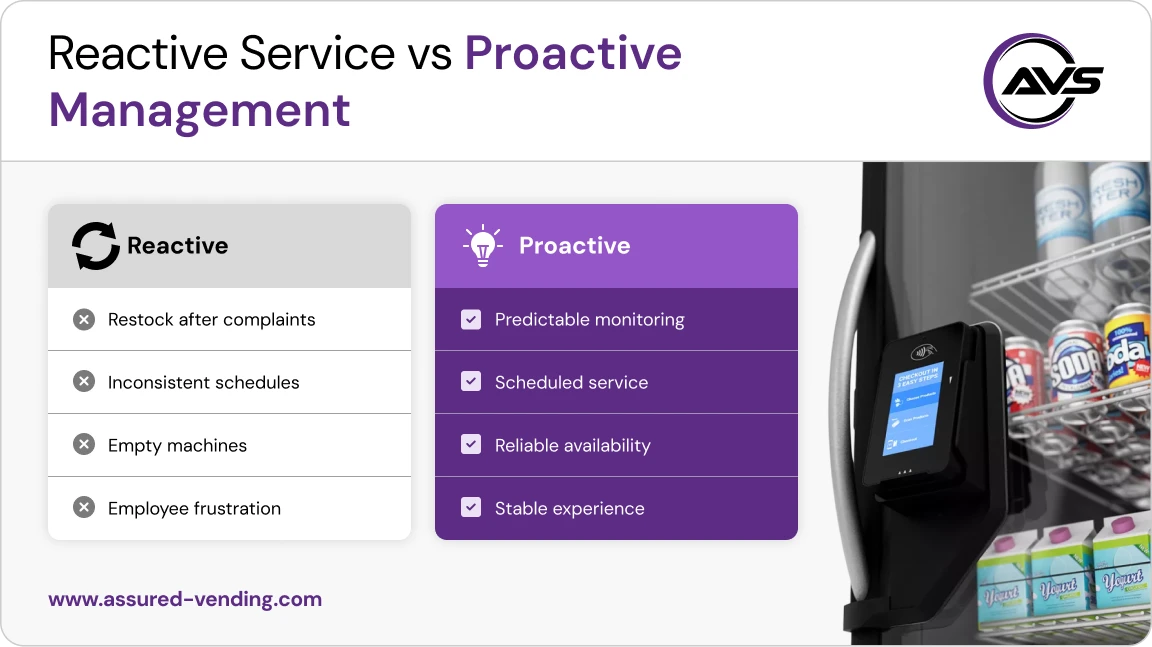
If service occurs primarily after complaints, the program lacks proactive management.
Modern vending relies on predictable monitoring and scheduled service, not problem-based visits.
Waiting for issues reduces employee confidence.
Product Variety No Longer Matches Workforce Needs
Workplaces evolve.
What worked when the team was smaller or structured differently may not work now.
Growth, shift changes, or demographic shifts can make an existing program outdated.
Regular evaluation keeps offerings aligned with employee expectations.
Break Times Extend or Feel Disorganized
When refreshment access requires extra effort, small delays compound.
Congestion, equipment downtime, or inconsistent availability extend break times beyond what was intended.
These subtle inefficiencies affect workflow stability.
Why Businesses Wait Too Long
Because vending operates in the background, performance issues rarely trigger urgency.
However, daily minor inconveniences affect:
- morale
- routine
- productivity
- perception of workplace quality
The longer dissatisfaction persists, the harder it becomes to rebuild trust in the program.
What an Upgrade Typically Improves
A modernized program focuses on:
- consistent availability
- reliable service schedules
- updated equipment
- balanced product selection
- predictable employee experience
The goal is operational stability, not just visual improvement.
Workplace vending programs influence daily routine more than most businesses realize. When small signs of dissatisfaction appear, they often indicate structural issues rather than temporary problems.
Upgrading a program at the right time improves reliability, engagement, and workflow consistency.
Break Room Tips & Workplace Insights, Delivered to Your Inbox.
Get the latest product trends, expert tips, and exclusive AVS offers, straight to your inbox.