Vending Machine vs. Micro-Market: Which Is Better for Your Workplace?
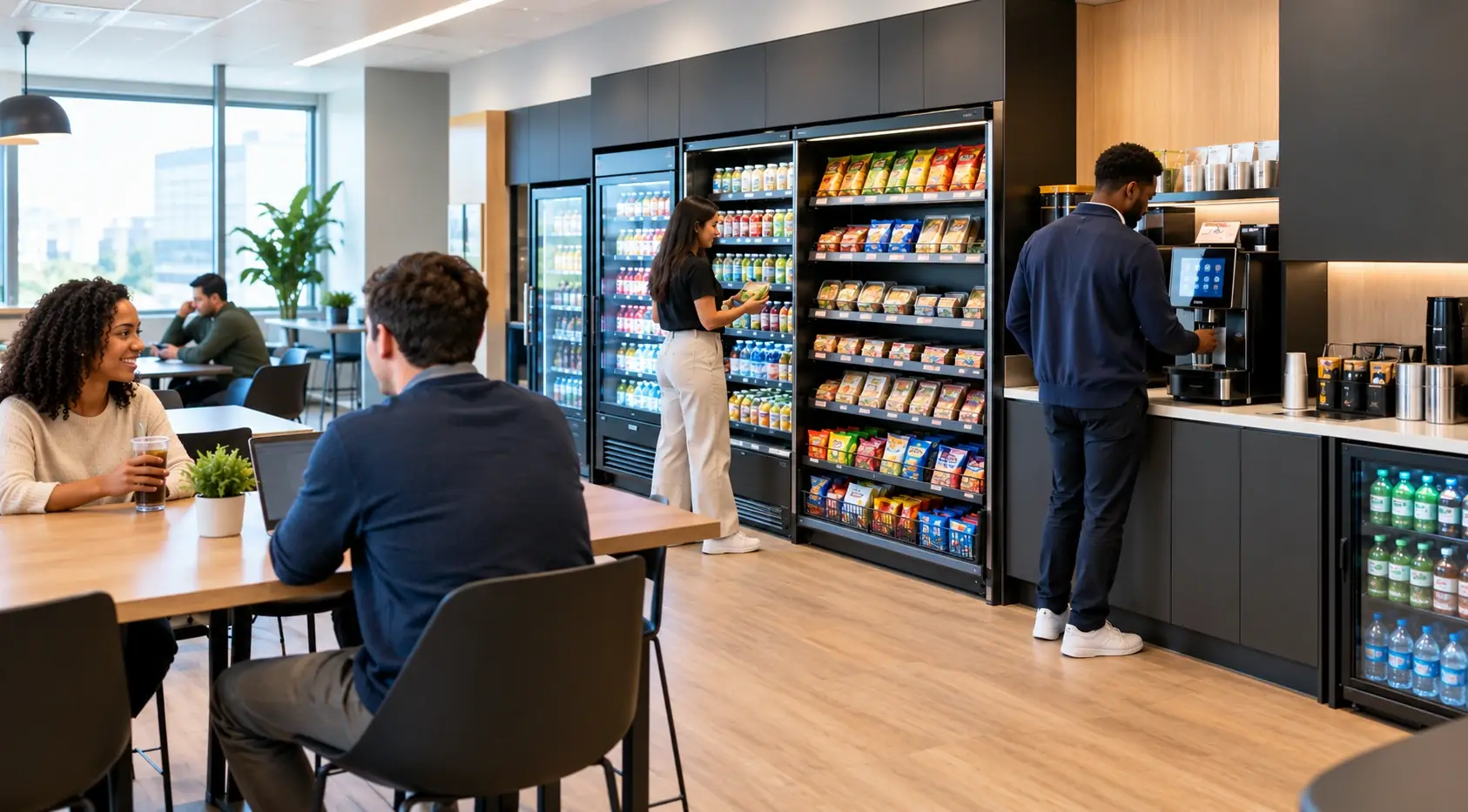
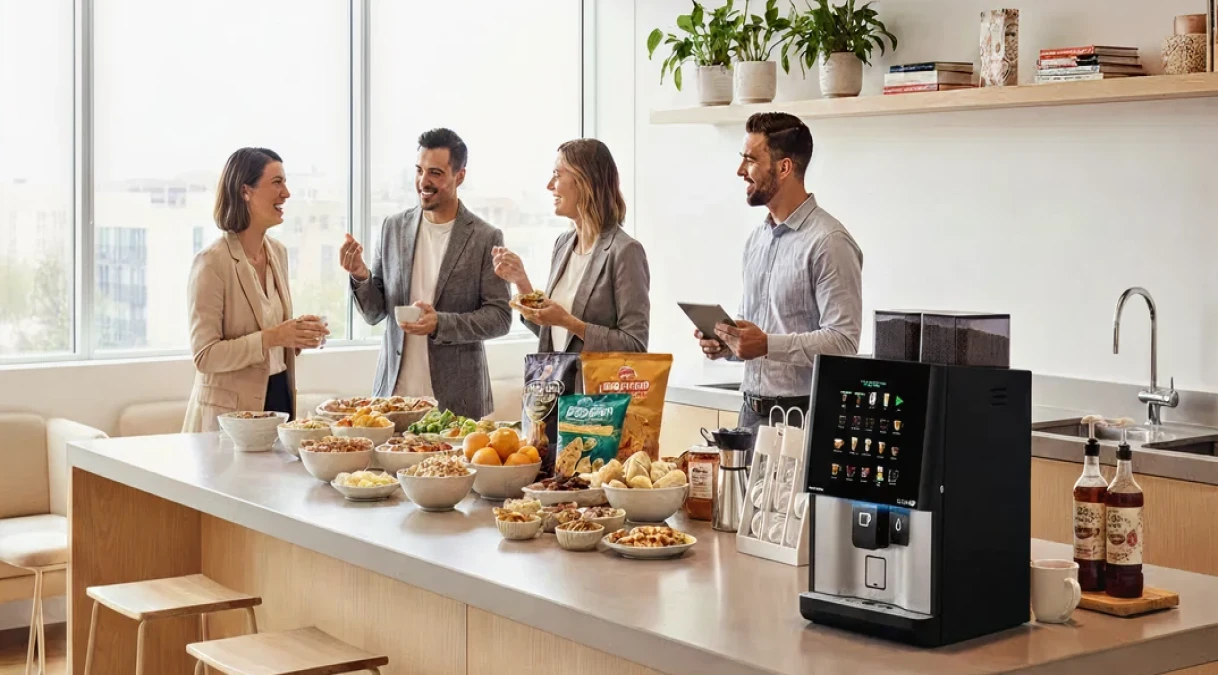
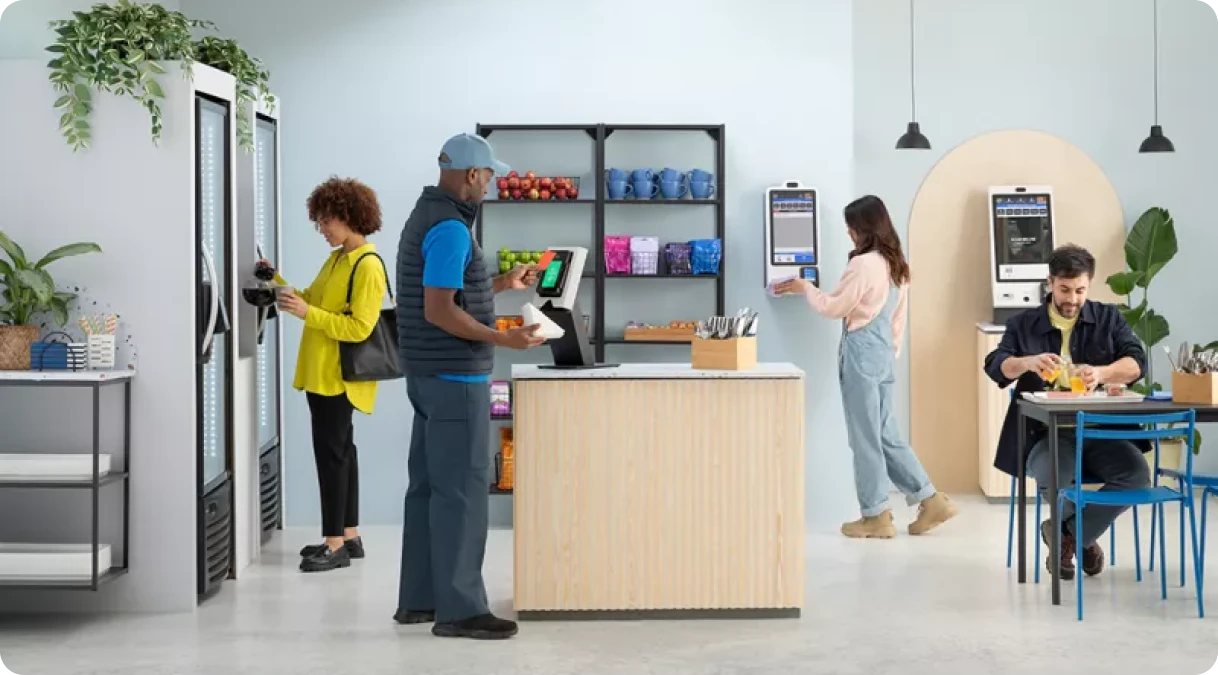
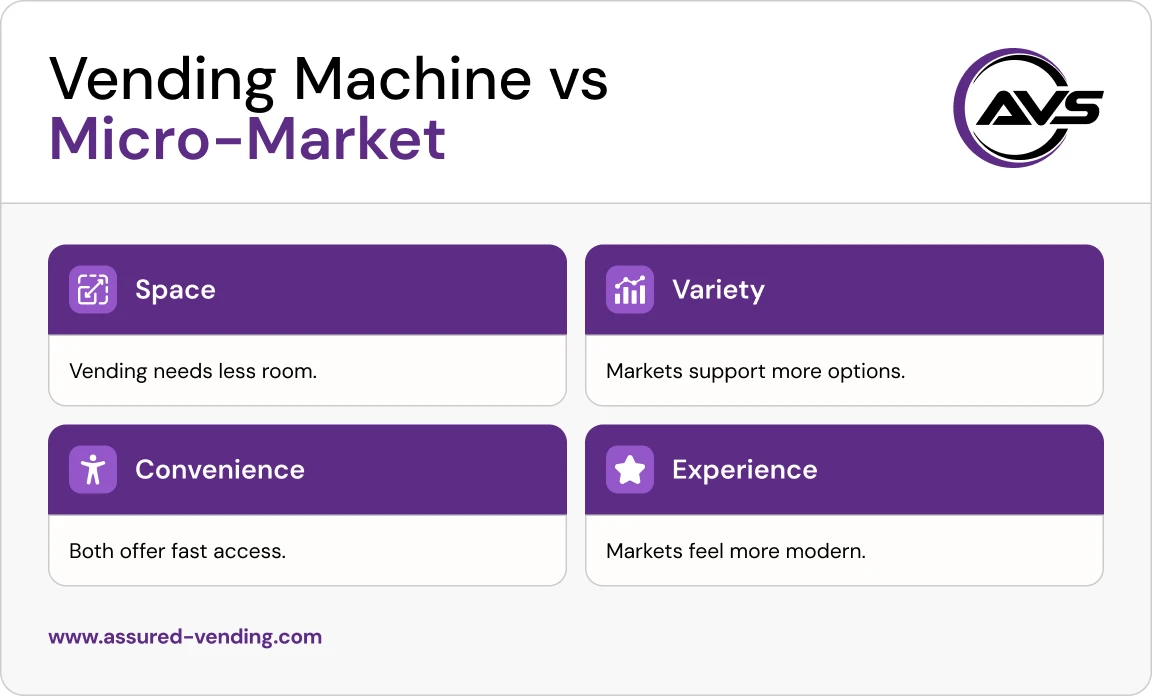
Businesses looking to improve on-site food and beverage access often compare vending machines and micro-markets. Both can work well, but the best fit depends on your space, employee population, traffic patterns, and the kind of workplace experience you want to create.


The Misunderstood Employee Benefit
Most companies believe they are providing a meaningful employee benefit when they install a coffee program. From an operational standpoint, that belief seems reasonable. Machines are installed, product is stocked, service is scheduled, and coffee is available.
From a behavioral and financial standpoint, many programs fail. Employees are not comparing your office coffee to no coffee. They are comparing it to Starbucks, Dunkin, Dutch Bros, local cafes, and delivery apps that bring premium beverages directly to the workplace. If the internal offering does not compete with that preferred experience, employees will continue to leave the office or order outside.
That behavior matters because coffee is not a low frequency perk. It is a daily ritual. The National Coffee Association reported in 2024 that past day coffee consumption among American adults reached a 20 year high, with approximately two thirds of adults drinking coffee within the past day. That means workplace coffee is not a niche amenity. It touches a large portion of the workforce and influences daily movement, focus, and interaction.
The Core Problem: Most Programs Are Built for Procurement, Not Behavior
Most workplace coffee programs are built around procurement logic. Buyers ask what the lowest cost per cup is, which supplier can service the account, which machine is easiest to maintain, and how quickly product can be restocked.
Those are valid operating questions. They are not sufficient buyer questions. The more important questions are behavioral. Will employees actually use the program. Does it compete with external options. Does it reduce offsite movement. Does it create a better workplace experience.
When companies optimize only for cost, they often create a program that technically provides coffee but does not change behavior. The company spends money, yet employees still leave the office. That is the failure point.
The Hidden Cost of Offsite Coffee Trips
Productivity Loss Callout
A typical offsite coffee trip includes leaving the workspace, walking or driving, waiting, ordering, receiving the beverage, returning, and resettling into work. A conservative time estimate is 15 to 30 minutes per occurrence.
Productivity model: If 25 employees leave once per day for coffee, the organization loses 6.25 to 12.5 labor hours per day. Across a five day week, that equals 31.25 to 62.5 hours. At a $30 loaded hourly labor cost, that is approximately $48,750 to $97,500 per year in direct time exposure.
This model is intentionally simple. It does not include missed collaboration, delayed responses, customer service interruptions, or the productivity drag of stopping and restarting focused work. Research by Gloria Mark and colleagues at UC Irvine has shown that interruptions can add time to task completion and create measurable attention disruption. The practical implication for an employer is clear. A coffee trip is rarely just a coffee trip. It is a workflow break.
Why Employees Still Choose Drive Thru or Delivery
Employees leave for coffee because the external option delivers a better experience. The value proposition is not just caffeine. It includes consistency, customization, perceived quality, brand familiarity, speed, and personal preference.
A workplace program that offers only basic coffee does not compete with a menu that includes espresso drinks, cold beverages, milk alternatives, flavored options, and reliable preparation. The employee is not rejecting coffee. The employee is rejecting a weak experience.
System Evaluation: What Each Model Actually Does
Single cup systems are often dismissed as lower quality, but that is an oversimplification. Their strongest advantage is customization. They allow employees to choose among brands, roast levels, flavor profiles, caffeine levels, and sometimes tea or specialty beverages. The experience is clean, consistent, and individually controlled.
Bean to cup systems provide a higher perceived experience because they grind whole beans per drink and can produce cafe style beverages. These machines are often deployed through rental or service agreements, which means the buyer is not necessarily taking on a major upfront capital purchase. The strength is quality and experience. The tradeoff is lower variety compared with single cup platforms.
Traditional drip systems remain cost efficient and scalable, especially for high volume settings. The limitation is engagement. Without freshness control, variety, and customization, drip coffee rarely competes against external coffee options.
The Missing Layer: Complete Beverage Experience
The strongest workplace programs are not just coffee programs. They are beverage ecosystems. Filtered water, ice, tea, cold beverages, and alternative drinks matter because not every employee drinks coffee and because hydration is a universal daily behavior.
When a workplace offers coffee, filtered water, ice, and cold beverage access together, the program becomes more useful across the full employee base. It supports recruitment, retention, culture, and daily engagement because it improves the environment repeatedly, not once per year.
Decision Framework for Buyers
- Do employees choose the internal program over external options.
- Does the program provide meaningful customization.
- Does it support both coffee and non coffee drinkers.
- Is freshness controlled.
- Does it reduce offsite trips.
- Is the program measured by usage and impact, not only cost.
Consequences of Getting It Wrong
A low cost program that is not used is not a savings strategy. It is waste. Employees still leave, the company still pays for coffee, productivity still leaks, and leadership mistakenly assumes the benefit exists because the equipment is present.
Final Position
Providing coffee is not the differentiator. Providing an experience that replaces external behavior is. Companies that understand this can turn a low cost daily amenity into a high frequency engagement tool with measurable productivity value.
If employees are still leaving the workplace for coffee, the issue is not access. It is experience. Evaluate the program by behavior changed, not coffee stocked.
Frequently Asked Questions
Q: What makes a workplace coffee program effective?
A: An effective program changes behavior by giving employees a beverage experience strong enough to compete with offsite options.
Q: Why does office coffee affect productivity?
A: When employees leave the office for better coffee, the company loses time, breaks focus, and weakens on site engagement.
Q: Should buyers evaluate cost per cup only?
A: No. Buyers should also evaluate usage, offsite trips avoided, employee satisfaction, and the broader workplace experience.
Q: What should a stronger program include?
A: A stronger program often combines coffee, water, ice, tea, cold beverages, and enough customization to satisfy different employee preferences.
Break Room Tips & Workplace Insights, Delivered to Your Inbox.
Get the latest product trends, expert tips, and exclusive AVS offers, straight to your inbox.