Why Some Workplace Vending Programs Fail (And How to Fix Them)
Not all vending programs perform well. Understanding common issues can help businesses improve reliability, engagement, and overall workplace satisfaction.


When Vending Becomes an Afterthought
Many workplace vending programs start with good intentions but gradually lose effectiveness over time.
Machines are installed, products are stocked, and for a while everything works as expected. But without consistent management and adaptation, vending programs can slowly decline.
When this happens, employees stop relying on workplace vending and begin looking for alternatives.
Problem #1: Inconsistent Stocking
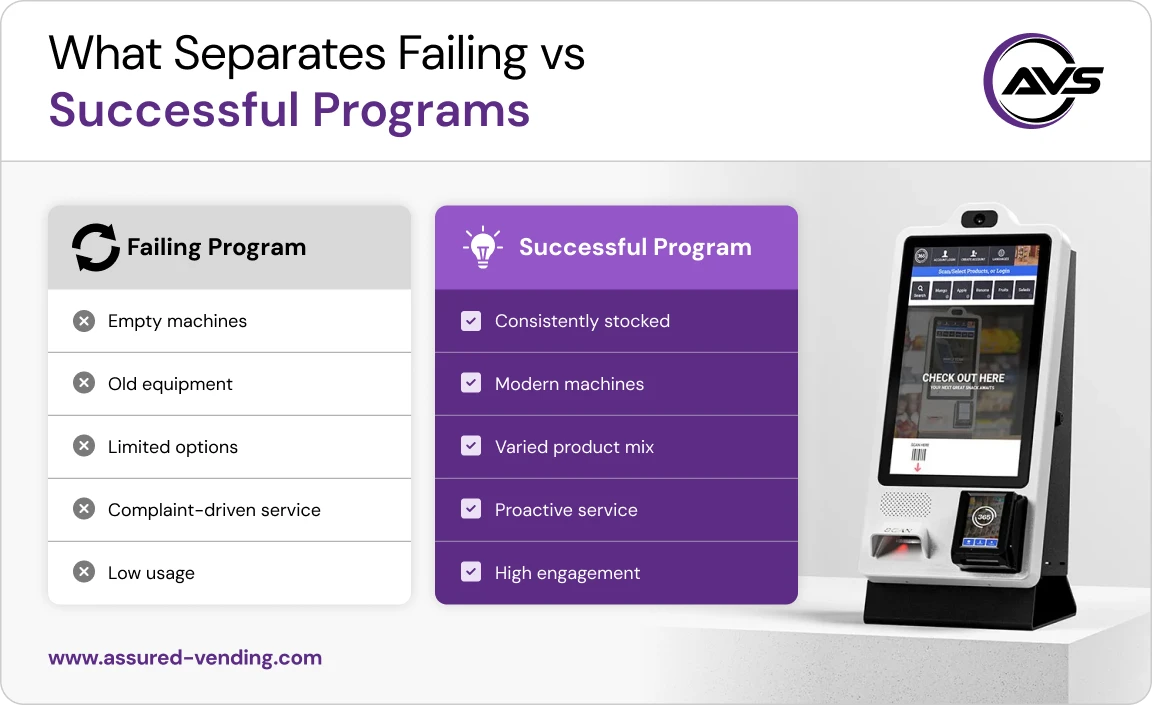
One of the most common issues in vending programs is unreliable product availability.
Employees quickly notice when:
- popular items are frequently out of stock
- machines are not refilled consistently
- product selection feels random or outdated
Once trust is lost, employees stop checking vending machines altogether.
Problem #2: Outdated Equipment
Older vending machines can create a poor user experience.
Common issues include:
- limited product capacity
- lack of modern payment options
- frequent mechanical problems
- slow or unreliable transactions
Employees are less likely to use machines that feel outdated or difficult to use.
Problem #3: Limited Product Variety
Workforces are diverse, and preferences vary widely.
Vending programs that offer limited or repetitive selections may struggle to maintain engagement.
Employees often look for:
- healthier options
- fresh food
- variety in snacks and beverages
- products that match current trends
Without variety, vending becomes a last-resort option rather than a daily convenience.
Problem #4: Reactive Service
Some vending programs rely on reactive service models, where issues are addressed only after complaints are made.
This can lead to:
- longer downtime
- delayed restocking
- inconsistent machine performance
Proactive service is essential for maintaining a reliable program.
Problem #5: Poor Placement
Machine placement within a workplace can significantly affect usage.
Machines located in low-traffic areas or inconvenient locations often see lower engagement.
Accessibility plays a major role in whether employees choose to use vending services.
How to Fix a Vending Program
Improving a vending program typically involves addressing the underlying issues rather than replacing the entire system.
Improve Reliability
Consistent stocking and maintenance help restore employee trust.
Upgrade Equipment
Modern machines with cashless payment options and improved functionality enhance the user experience.
Expand Product Selection
Offering a wider variety of products helps meet the needs of a diverse workforce.
Implement Proactive Service
Regular service schedules prevent problems before they impact employees.
Optimize Placement
Positioning machines in high-traffic areas increases visibility and usage.
When It May Be Time for a Change
If a vending program continues to struggle despite improvements, it may be time to evaluate alternative solutions.
This could include:
- upgrading to modern vending systems
- incorporating micro-market options
- working with a provider that offers more structured service
A well-managed program should feel like a reliable part of the workplace, not an inconvenience.
Workplace vending programs often fail due to preventable issues such as inconsistent service, outdated equipment, and limited product selection.
By identifying these challenges and making targeted improvements, businesses can transform vending into a dependable and valuable workplace amenity.
Break Room Tips & Workplace Insights, Delivered to Your Inbox.
Get the latest product trends, expert tips, and exclusive AVS offers, straight to your inbox.